


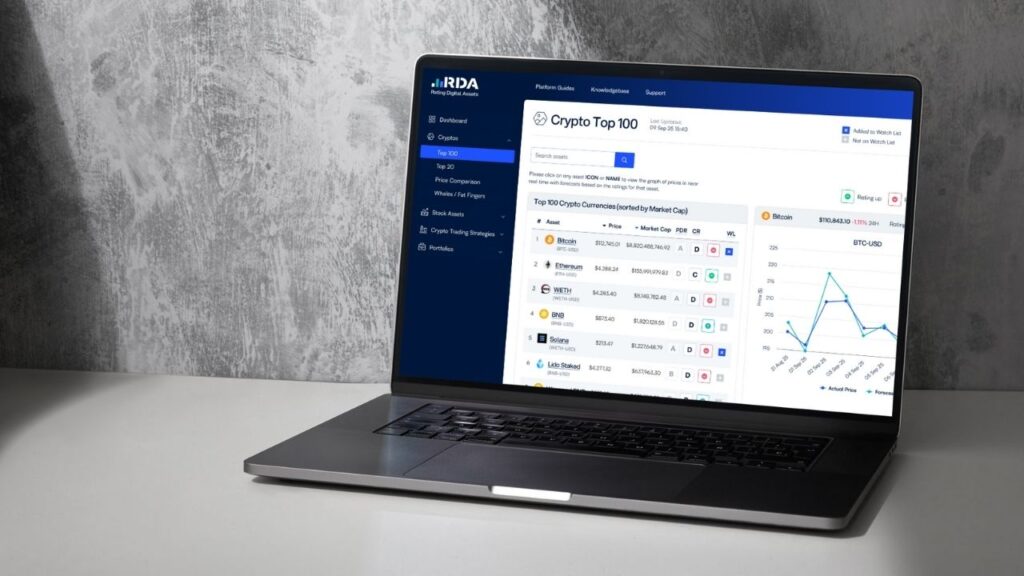

As digital asset markets continue to mature, the conversation is shifting away from novelty and towards fundamentals: risk, transparency, methodology and trust. The RDA platform has been built for that phase of the market, and while a broader public launch is planned for 2026, the platform is now live, evolving and being shaped by research-led thinking.
Grounded in academic excellence
At its core, RDA is a digital asset ratings platform grounded in academic finance. It combines Nobel Prize–winning research frameworks with modern AI and machine-learning techniques to produce data-driven ratings that are designed to be transparent, explainable and free from human bias. That combination matters because much of the noise in crypto markets still comes from subjective opinion, sentiment and influence rather than evidence.
A methodology-led approach to ratings
One of the platform’s defining characteristics is its focus on methodology. RDA’s ratings stem from measuring behaviour: volatility, liquidity and risk dynamics over time. These concepts, long used in traditional financial markets, are applied carefully to digital assets that trade 24/7 and behave very differently to equities or bonds.
Risk, in particular, is treated as something to be measured rather than guessed. RDA analyses asset behaviour using established volatility measures, including rolling standard deviations across different time windows, alongside liquidity risk models drawn from peer-reviewed research. The aim is to give users a clearer, more consistent view of how assets behave under different conditions.
Transparency by design
Transparency is a deliberate design choice. Many rating systems rely on opaque models that users are asked to trust without understanding. RDA takes the opposite view. As regulation, institutional interest and scrutiny continue to increase across digital asset markets, clear assumptions and explainable outputs are becoming essential rather than optional.
RDA was founded by Professor Andros Gregoriou, Professor of Finance and Head of Research at Liverpool Business School, whose academic career spans more than two decades across market liquidity, financial stability and digital assets. His work has consistently focused on how markets behave under stress, how risk manifests over time, and how data, rather than sentiment, should underpin financial decision-making.
Why RDA was created
The platform grew out of long-standing concerns about how financial assets are assessed, particularly in fast-moving or opaque markets. Following the global financial crisis, questions were raised across academia and policy circles about ratings, bias and incentives. In digital asset markets, many of those issues remain unresolved, with opinion-led commentary and black-box scoring systems still common.
Over the coming weeks and months, RDA will begin sharing more educational content alongside the platform itself. Short explainers and longer deep-dive essays on topics from stablecoins to regulation, liquidity and blockchain fundamentals will form part of a wider effort to raise the level of understanding around digital asset markets, without hype.
January will mark a more visible phase for RDA, but in the meantime, we hope you enjoy the platform. Start a free trial, today.
